
Welcome
Start exploring here! We hope this will be a useful resource to help you find the information you need about cerebral palsy and other childhood-onset disabilities. We want to help you to find answers to your questions – so please let us know what else you would like us to cover. Here we are presenting videos, summaries, research information and other resources.
Read on for more
Ways we can help
1
Family-friendly Books
Discover our collection of family-friendly books featuring accessible, research-based insights. These titles include the perspectives of families and individuals with lived experience, offering valuable guidance while supporting parents on their journey.
2
Free Chapters
We have selected a range of chapters from our books, offering helpful insights and practical tips. Our chapters summaries highlight key points. View the full chapter to explore each topic in more depth.
3
The Knowledge Bank
Explore the answers to your questions here. Find out more about conditions, treatments, interventions, and all aspects of care. Follow signposts to find more in-depth, evidence-based information from Mac Keith Press content, as well as other great sources of knowledge.
4
Plain Language Summaries
Plain language summaries are an effective way of communicating scientific research to a wider audience. By presenting the key findings and significance of a study in easy-to-understand language, the content becomes more accessible to more people. Here we present summaries of papers published in Developmental Medicine & Child Neurology (DMCN).
5
Helpful Videos
Here you will find a collection of short videos from authors and editors summarising their work. They cover Developmental Medicine & Child Neurology (DMCN) articles, Mac Keith Press books and e-learning. The aim of the videos is to help viewers get a clear understanding of why the research is important, how it was carried out, and real-world implications.
Gillette Children’s Healthcare Series
The goal of the Gillette Children’s Healthcare Series is to empower families through a greater understanding of their condition and therefore help optimize outcomes for children, adolescents and adults living with these childhood-acquired and largely lifelong conditions.
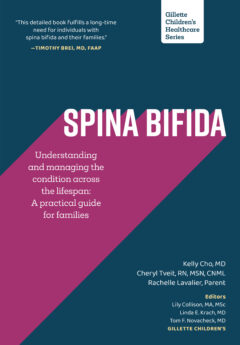
Spina Bifida
“Speaking from the perspective of someone living with spina bifida, I found this book does a phenomenal job of describing all the different ways the condition can affect a person. It also caters to different audiences—people with spina bifida, parents, and those who take care of people with the condition—so every reader can get something out of this book. The pictures do a really good job of showing how some people with spina bifida may function. The suggestions of how to exercise the muscles differently, too, are very helpful for someone who may struggle to find a solid workout routine. I learned some new things about spina bifida by reading this book that I will take with me as I continue my own journey of being an adult with the condition.”.”
Gracie Hadlich, Adult living with spina bifida
Click on ‘Buy Now’ to find out more!
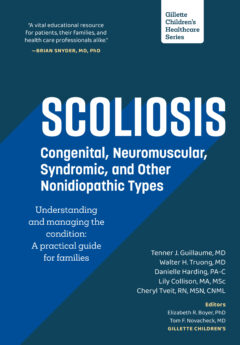
Scoliosis: Congenital, Neuromuscular, Syndromic and other Nonidiopathic Types
“The team at Gillette Children’s has created an outstanding second book on scoliosis. This resource skillfully combines the latest clinical research with
personal stories, weaving together a rich tapestry of experiences that reflect the many diverse aspects of this condition. As a parent of a teenage daughter recently diagnosed with complex scoliosis, I understand the pressing need for accurate information and support. I often wished for a reference guide of this caliber during my search for information to help us navigate this journey. This uniquely practical guide offers clear language and step-by-step instructions, addressing the complexities of scoliosis throughout a person’s life. Having access to this information ultimately empowers families like ours to make informed decisions in collaboration with multidisciplinary teams, balancing clinical insights with the evolving needs of our children. I highly recommend this impactful book for families and professionals working in the field of scoliosis. Congratulations to everyone who contributed to this invaluable work, which brings hope and clarity to families living with scoliosis.”
Ann Marie Sutton, Parent of daughter with scoliosis, US
Click on ‘Buy Now’ to find out more!
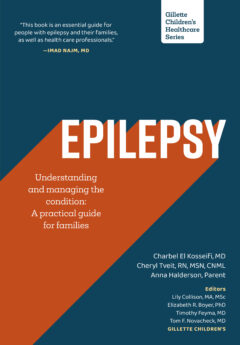
Epilepsy
“Finally! A book that truly helps families understand epilepsy. As a mother of a special needs child with epilepsy, I found Epilepsy to be an invaluable resource. This book skillfully combines medical insights with heartfelt stories, addressing the real-life challenges families like ours face every day. … I wish I had this book at the beginning of my journey. It’s a must-read for any family navigating life with epilepsy.”
Colleen Peterson, parent of son with Wolf-Hirshhorn and Lennox-Gastaut syndromes, USA
Click on ‘Buy Now’ to find out more!

Spastic Diplegia
“This is an indispensable guidebook for navigating spastic diplegia, as it is written for families with the condition. It imparts a deep understanding of the medical science and treatment pathways, supported by comprehensive evidence-based references and information resources. The author’s generous sharing of her and her son’s journey, and those of many others, provides valuable sign-posting, hope, and inspiration for the reader.”
Jean and John Glynn, parents of a son with spastic diplegia, Ireland
Click on ‘Buy Now’ to find out more!

Spastic Hemiplegia
“As someone with right spastic hemiplegia, I was amazed by how much of the information was relevant to my memories of childhood therapy appointments and doctor visits. I deeply enjoyed reading the testimonies of those with CP, and I felt recognized inside their stories. From small things like official medical terminology to detailed explanations on why I was receiving certain treatments as a child, this book helped me not only recontextualize my own experiences but also prepared me to be a better medical advocate for myself moving into adulthood.”
Emmalynne Shumard, Student; Adult with spastic hemiplegia, US
Click on ‘Buy Now’ to find out more!

Spastic Quadriplegia
“This book presents clear and concise explanations and eliminates the confusion caused by misinformation online. It has helped me realize that we are not alone; there are other families just like ours experiencing the same highs and lows, joys and sorrows. It will provide comfort and hope to families striving to adjust to a new and oftentimes difficult diagnosis.”
Kristen Stier, Mother of a young adult with spastic quadriplegia, US
Click on ‘Buy Now’ to find out more!

Craniosynostosis
“This is an excellent and informative book that is both clear and factual. It serves as a valuable resource for families, providing them with essential knowledge about craniosynostosis and empowering them to engage confidently with medical and health professionals. The personal stories included offer hope and reassurance, reminding families that they are not alone in their journey. This is the book I wish I had when my son was diagnosed with sagittal craniosynostosis in 2019.”
Elaine L. Kinsella, Parent; Chartered Psychologist and Associate Professor in Psychology, University of Limerick, Ireland
Click on ‘Buy Now’ to find out more!

Idiopathic Scoliosis
“This book is great for anyone on this journey! Our daughter was diagnosed with juvenile idiopathic scoliosis right before she started kindergarten, and we were so worried and overwhelmed, and had so many questions. We wish we had this book during that time as it answers so many questions. We still have many questions and this book helps us pave a path today and for the future.”
Amber Marlatt, Parent of daughter with juvenile idiopathic scoliosis, US
Click on ‘Buy Now’ to find out more!
Free chapter downloads
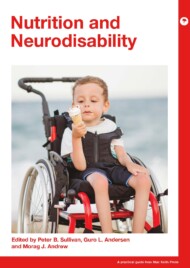
Feeding and Nutritional Management Strategies
Nutrition and Neurodisability highlights managing feeding and nutrition in children with neurological impairments. Chapter 9 highlights how a multidisciplinary team approach can improve feeding safety and efficiency, addressing issues like dysphagia, poor nutrition, and gastrointestinal problems. Interventions include oral nutrition support, tube feeding, and caregiver training.
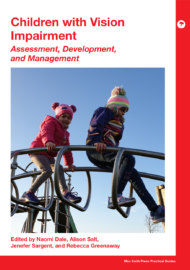
Personal experiences from a young person with visual impairment, Holly Tuke
This chapter is a personal account by Holly Tuke, a woman with retinopathy of prematurity, which caused blindness. Despite challenges with accessibility and independence, Holly excelled academically with support and assistive technology. Now a university graduate, she works in the charity sector and runs a successful blog, advocating for disability awareness.
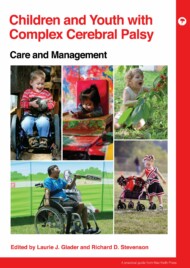
Cerebral Palsy: Through the Eyes of Parents
Parents raising children with complex cerebral palsy (CP) face emotional, practical, and social challenges, including balancing caregiving with personal needs. Support from clinicians, fostering the child’s independence, and improving quality of life through recreational activities are essential. Long-term care planning and focusing on the child’s interests are also important.
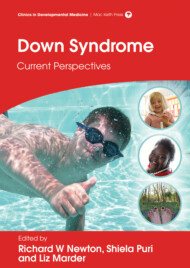
Life with and for a Person with Down Syndrome
Families of children diagnosed with Down syndrome often face concerns about health, development, and support. It’s essential to deliver the diagnosis with care and provide accurate, up-to-date information. Early health assessments, addressing feeding challenges, and fostering development are key to helping children thrive, supported by love, encouragement, and healthcare guidance.
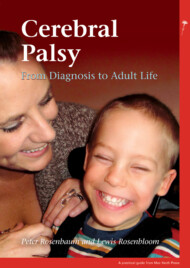
What is Cerebral Palsy?
‘Cerebral palsy (CP) describes a group of permanent disorders of the development
of movement and posture, causing activity limitation, that are attributed
to non-progressive disturbances that occurred in the developing fetal or infant
brain. The motor disorders of cerebral palsy are often accompanied by disturbances
of sensation, perception, cognition, communication, and behaviour,
by epilepsy, and by secondary musculoskeletal problems.’ This is the official (2007) definition – read the full chapter to find out much more.
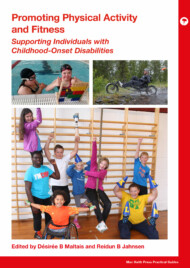
How to Promote a Physically Active Lifestyle Across the Lifespan
The Knowledge Bank
Explore the answers to your questions here. Find out more about conditions, treatments, interventions, and all aspects of care. Follow signposts to find more in-depth, evidence-based information from Mac Keith Press content, as well as other great sources of knowledge.
What is cerebral palsy and how can we talk meaningfully about it?
Cerebral palsy (CP) is a broad diagnosis that encompasses a group of disorders affecting movement and posture.
What is cerebral palsy and how can we talk meaningfully about it?
Recently an expert group described cerebral palsy (‘CP’) as ‘a widely used descriptive label for a spectrum of motor impairments caused by non-progressive brain injury or malformation occurring during early development. Advances in research have significantly refined our understanding of CP, including insights into its genetic, inflammatory, and neurophysiological underpinnings.’ The Proposed updated description of cerebral palsy is available here: https://onlinelibrary.wiley.com/doi/epdf/10.1111/dmcn.16274
One of our Associate Editors, Martin Gough, draws his own story of CP in this video.
You can find an overview of what CP is in chapter 1 from Cerebral Palsy: From Diagnosis to Adult Life (Rosenbaum, 2012). Free download.
What is a systematic review?
A systematic review is a summary of all the literature on a particular topic in response to a research question. Critical methods are used to identify and assess the quality of the literature.
How do researchers decide what to study?
Many factors can contribute toward deciding what to study, for example: personal interest, gaps in the literature, relevance to current issues, and understanding what matters to their patients and their support networks.
To learn more about this last point, see a paper on ‘UK research priority setting for childhood neurological conditions’.
How do researchers decide what to study?
UK research priority setting for childhood neurological conditions
Full paper: https://onlinelibrary.wiley.com/doi/10.1111/dmcn.16021
Plain language summary: https://onlinelibrary.wiley.com/doi/10.1111/dmcn.16099
Author podcast: https://www.youtube.com/watch?v=F41Bjh_y50A
In this project, we wanted to find the most important unanswered questions about treatments, or therapies for children and young people with childhood neurological conditions such as epilepsies, cerebral palsy, and many rare conditions. This is called a Priority Setting Partnership.
Priority Setting Partnerships aim to help patients, carers, and health professionals work together to agree research priorities. There is a structured way to do this. It includes two surveys, the first to ask people questions that they may have about childhood neurological conditions. Then, after a team of professionals have reviewed the questions, and checked if they are answered, another survey asks people to choose their 10 highest priority questions. After many people have ranked the questions, the highest-ranking questions are discussed in a workshop to choose the top 10.
People were invited to do the surveys via charities, clinical services, and social media. In total 701 people completed survey one and they had 1800 questions. After removing repeats, grouping them, then checking medical evidence, there were 44 research priorities. In survey two, 1451 people selected their top 10 questions. Over three-quarters of both survey responders were parent-carers or young people with childhood neurological conditions. When everyone’s priorities were combined the top 26 were chosen. They were discussed at a workshop with 14 healthcare professionals, 11 parent-carers, and 2 young people; and the top 10 priorities were agreed.
The 10 priority questions include: therapies, medications and treatments for rare and common childhood neurological conditions, and supporting the challenges that young people with many different childhood neurological conditions may have e.g. sleep difficulties, supporting emotional wellbeing, and managing symptoms like pain.

What is a meta-analysis?
A meta-analysis combines the results of multiple scientific studies and provides statistics. It is conducted to derive conclusions from a body of research.

Submit a question
Let us know what other questions you have. Are there specific topics you would you like us to cover?
Contact us now using the form.
Plain Language Summaries
Plain language summaries are an effective way of communicating scientific research to a wider audience. By presenting the key findings and significance of a study in easy-to-understand language, the content becomes more accessible to individuals with disabilities, parents, caregivers, and others. Here we present summaries of papers published in Developmental Medicine & Child Neurology (DMCN).
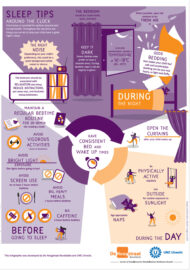
Sleep problems in children with cerebral palsy and their parents
The study found that sleep problems are common in children with cerebral palsy (CP) aged 0 to 11 years. The most common problems reported by parents were: daytime fatigue, difficulty falling asleep, and early-morning waking. Children with CP were also more likely to have sleep problems than typically developing children, and children with CP who cannot walk were more severely affected by sleep problems than children with CP who can walk.
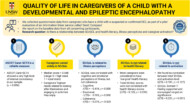
Quality of life in caregivers of a child with a developmental and epileptic encephalopathy
Developmental and epileptic encephalopathies (DEEs) are severe forms of epilepsy that usually start during infancy. There are many types of DEE, making each specific diagnosis extremely rare. Children with a DEE typically have seizures that are hard to treat and that impact their development and learning. Other symptoms may include feeding difficulties, movement problems, and features on the autism spectrum.
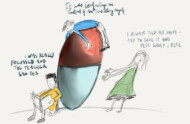
Experiences of children and adolescents with attention-deficit/hyperactivity disorder taking methylphenidate
Understanding the experiences of adolescents diagnosed with attention-deficit/hyperactivity disorder (ADHD) and taking ritalin and other stimulant medication is crucial in order to improve medical counselling to them. A central theme in these experiences is adolescents’ self-esteem and their sense of control on their body and life.
Epilepsy and cannabis: so near, yet so far
In 2018, the UK government changed the law so that cannabis-based medicines could legally be prescribed. Since then, very few prescriptions have been issued. Why is this?
Some children with epilepsy have seizures that respond very poorly to standard medications and their quality of life suffers. CBMPs may have an important role in helping those children. There are many forms of CBMPs and one medicine, cannabidiol, now has a license for some rare types of epilepsy.
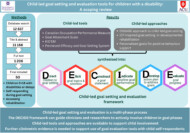
Child-led goal setting and evaluation tools for children with a disability: A scoping review
Children with disabilities and delays benefit from being involved in setting and evaluating intervention goals. When goals hold personal value for children, they can feel more motivated to work towards them, which can improve their intervention outcomes. However, in current practice, parents or therapists are most often the primary decision-makers about intervention priorities. Which practices support allied health professionals to involve children with disabilities in goal setting and evaluation?
‘Power in Mobility’: Parent and therapist perspectives of the experiences of children learning to use powered mobility
This study focuses on the importance of mobility for children with mobility impairments and the impact of using powered mobility devices on their development and participation. To gather data, interviews with parents and therapists of children who had recently started using powered mobility devices were analyzed to identify common themes and gain insights into the experiences and perceptions of parents and therapists.
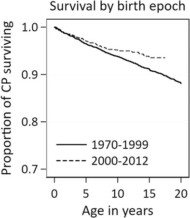
Survival of individuals with cerebral palsy: A Victorian longitudinal cohort study spanning four decades
The aim of this research was to provide an updated description of the death rates, trends in death rates over time, and predictors of deaths of persons with cerebral palsy (CP) who were born in the Australian state of Victoria between 1970 and 2012. The authors found that improvements in survival for those born in the 2000s was likely mainly related to a proportional reduction in complex CP, a finding that is supported by other studies.
Letting Tourette’s be: The importance of understanding lived experience in research and the clinic
Tourette syndrome is a neurodevelopmental condition characterized by involuntary movements and sounds that are known as tics. Historically, the focus of biomedical and clinical research and treatment has been on reducing these tics, viewing them primarily as symptoms of a neurological disorder. However, in this article we argue that this approach is too narrow as it does not adequately consider the lived experiences of Tourettic individuals.
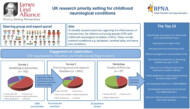
UK research priority setting for childhood neurological conditions
In this project, the researchers wanted to find the most important unanswered questions about treatments, or therapies for children and young people with childhood neurological conditions such as epilepsies, cerebral palsy, and many rare conditions. This is called a Priority Setting Partnership. Priority Setting Partnerships aim to help patients, carers, and health professionals work together to agree research priorities. After two rounds of surveys, the top 10 priorities were identified.
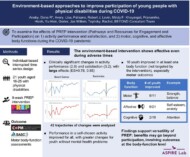
Environment-based approaches to improve participation of young people with physical disabilities during COVID-19
Personalized interventions to enhance participation in meaningful activities in everyday environments are recommended for young people with physical disabilities. Pathways and Resources for Engagement and Participation (PREP) is one such intervention, focusing on changing the environment (e.g. inaccessibility, limited social support, lack of availability of programs) and coaching young people/parents and community members on removing environmental barriers.
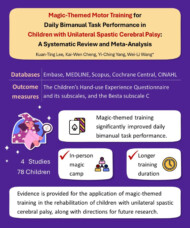
Magic-themed motor training for daily bimanual task performance in children with unilateral spastic cerebral palsy: A systematic review and meta-analysis
Unilateral spastic cerebral palsy (CP) is a disorder of motor and postural development caused by early brain injury. This impairment poses significant challenges for daily physical tasks such as getting dressed, taking a shower, cutting food, etc. The authors of this study undertook a systematic literature review to discover what research has taken place on the effectiveness of magic-themed interventions in improving task performance in both hands in children with unilateral spastic CP.
Helpful videos
Here you will find a collection of short videos from authors and editors summarising their work. They cover Developmental Medicine & Child Neurology (DMCN) articles, Mac Keith Press books and e-learning. The aim of the videos is to help viewers get a clear understanding of why the research is important, how it was carried out, and real-world implications.

Making visible disability the new normal in health professionals | Rosenbaum & Hanes | DMCN
Experiences of adolescents with cerebral palsy | Stacey Cleary, Freya Munzel & Prue Morgan | DMCN
Predictors of community participation in children with cerebral palsy | Daniela Testani | DMCN
Mobility device use in children with cerebral palsy | Elizabeth Maus | DMCN
Caregiver-reported change in individuals with encephalopathy | Downs & Keeley | DMCN
Caring for Children with Neurodevelopmental Disabilities | Alfred Scherzer & Erica Cloodt
Parasports for cerebral palsy beyond the Paralympics | Julia Hanes, Joel Ewert & Dynai Eilig | DMCN
Fall experiences of ambulatory children and adults with CP | Esterley, Pederson & Wandersee | DMCN
In developmental disability, parenting is a dance led by the child | Rosenbaum & Chambers | DMCN
Contact us
Please feel free to contact us if you have any feedback or suggestions: